
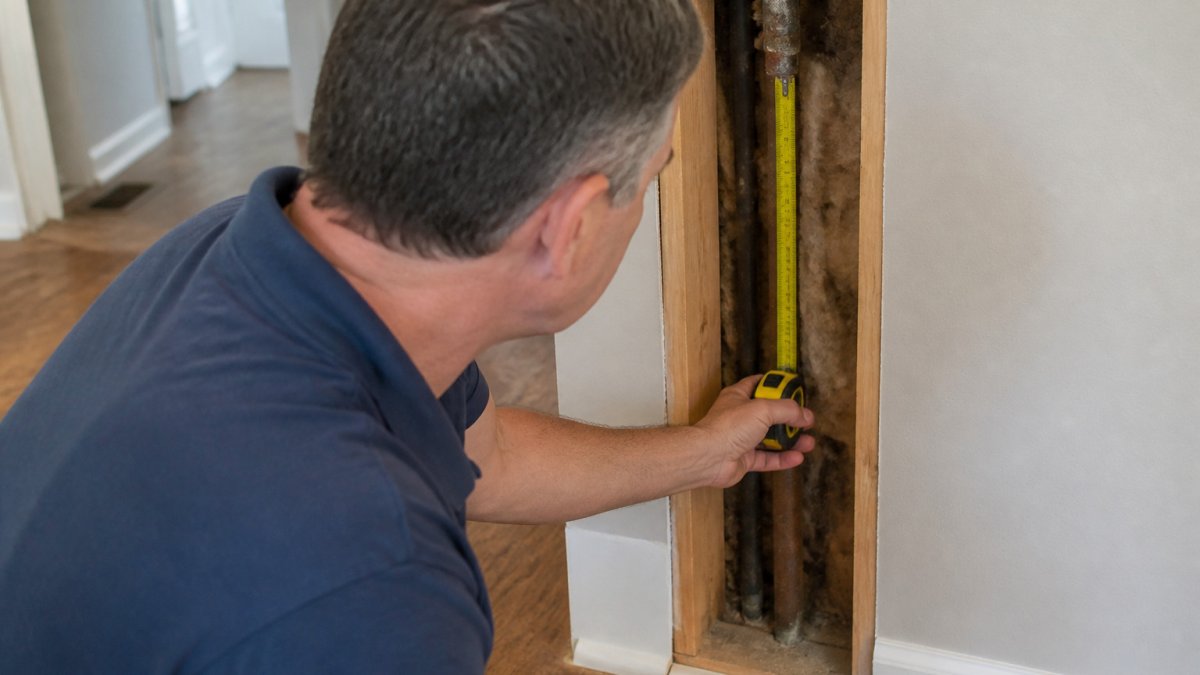
 how-to
9 NHIE Measurement and Clearance Facts to Memorize
Last Updated: November 2, 2026
Quick Summary
The nhie measurement facts that matter most are standard framing and sheet dimensions, the nominal-versus-actual size gap, and the clearances inspectors must recognize. Learn each value alongside the component it applies to, since the exam tests whether a measurement fits a described condition.
- Keep nominal and actual lumber sizes distinct, since a 2x4 measures smaller once dressed and dried.
- Wall studs are typically spaced 16 inches on center, with 24 inches on center also common.
- Common plywood and OSB sheathing sheets come in 4 by 8 foot dimensions.
- Learn each clearance with its component, such as combustion clearances, electrical working space, and roofing clearances.
- Read the full scenario and name the component before choosing an answer.
Table of Contents
Measurement questions are where a lot of NHIE candidates lose points they should have won, and a solid grasp of the nhie measurement facts is one of the best ways to avoid that. Students often know the general material, then miss questions that hinge on one number. A 1-inch difference in a clearance value can turn a correct answer into a wrong one. The good news is that these facts are learnable, and a short, focused review goes a long way.
The NHIE covers building components across three domains, and measurement facts show up inside all of them. You do not need to memorize every dimension in the field. You do need the values that appear most often on exam-style questions.
Here is why these questions feel tricky:
- Similar numbers look alike. Candidates mix up values that differ by only a small amount.
- Units shift the answer. Inches and feet, or millimeters and centimeters, can change how a question reads.
- Context hides the clue. The question describes a situation, and the measurement sits in a single phrase.
- Memorizing without application fails. Knowing a number does not help if you cannot tie it to a real building condition.
A common mistake is memorizing a list of numbers with no reason behind them. Learn each value with the component it applies to. If you know why a clearance exists, the number is much easier to recall under pressure.
Core Material Dimensions to Know for the NHIE
Dimensional knowledge starts with the building materials you will see on the job every day. Framing and sheet materials come up often, so these deserve steady review.
Framing and Structural Member Sizes
Structural lumber dimensions are a frequent source of questions. Nominal sizes and actual sizes differ, and that gap confuses many test takers. A 2x4 is labeled by its nominal size but measures smaller once it is dressed and dried. Keep the nominal-versus-actual distinction clear in your notes.
- Know the common nominal framing sizes, such as 2x4 and 2x6, and their approximate actual dimensions.
- Recognize that joist and rafter spans depend on size, spacing, and species.
- Remember that wall studs are typically spaced 16 inches on center, with 24 inches on center also common.
Standard Sheet and Panel Sizes
Sheathing and panel questions test your recall of standard sheet dimensions. The most common sheet size is 4 feet by 8 feet (OSB (Oriented Strand Board)). Know how that size affects panel layout and how many sheets a surface requires.
- Plywood and OSB sheathing commonly come in 4 by 8 foot sheets.
- Panel edges should fall on framing members for proper support.
- Gaps between panels allow for expansion, a detail that often appears in questions (Prevent Buckling with Proper Spacing).
Practice answering with the component in mind, not just the number. Our NHIE Practice Questions can help you test these facts in exam format.
Clearance Values Inspectors Are Expected to Recognize
Clearances are the distances that keep components safe, accessible, and working as designed. Inspectors are expected to spot when a clearance is too small. Many exam questions describe a condition and ask whether it meets the standard. Mastering these spatial requirements remains a critical step for anyone preparing to pass the NEC licensing exam.
Focus on the clearances that come up most often:
- Combustion and heating clearances around furnaces, water heaters, and vents.
- Electrical working space in front of panels and equipment.
- Roofing clearances between materials and the structure around them.
Do not rely on this list alone. Your exam prep resource and the code references it cites are the final authority. When a clearance value is in doubt, check the source the question points to.
NHIE Measurement Specifications: What the Exam Actually Tests
The NHIE does not ask you to recite a code book. It tests whether you can recognize a measurement, judge whether a condition is acceptable, and identify the issue an inspector should report. Think of each question as a small inspection decision.
Watch out: candidates often assume the exam wants the largest or most conservative number. It usually wants the value that matches the specific condition described. Read the component name and the situation carefully before you choose.
Expect questions in these forms:
- Identify the correct dimension for a named component.
- Decide whether a measured clearance meets the stated requirement.
- Recognize which deficiency an inspector would note.
Building Dimensions Practice Questions That Mirror the Exam
Practice is the fastest way to turn dimensional facts into reliable recall. Work through questions that mirror the exam's wording, not just flashcard prompts. Our NHIE Exam Practice Questions 2026 can help you work through common question formats.
Try this approach when you practice:
- Read the full scenario before looking at the answer choices.
- Name the component being described.
- Identify the measurement type, such as span, spacing, or clearance.
- Choose the answer, then explain to yourself why the others are wrong.
Roofing System Practice Questions and Clearance Checks
Roofing questions combine structure and clearance, which makes them a good test of your full dimensional knowledge. Work through scenarios involving rafter spacing, ridge and eave details, and clearances between roofing components and nearby structures.
When you miss a roofing question, do not just note the right answer. Write down which detail you overlooked. Patterns in your mistakes tell you exactly where to focus next.
Building a Measurement Flashcard Routine That Sticks
Flashcards work best when they are short, frequent, and tied to a specific component. Build cards with the component on one side and the value and its purpose on the other. Review them in short daily sessions rather than one long session per week.
- Create one card per dimension or clearance value.
- Add a one-line note explaining why the value matters.
- Shuffle cards so you recall each fact, not just the next one in order.
- Retire cards you know cold and keep reviewing the ones you miss.
Start Your Free Diagnostic to Find Your Measurement Gaps
Knowing which measurement facts you are weak on is the first step to fixing them. The fastest way to find those gaps is a diagnostic that shows where you stand before you study further. Start with our Free Diagnostic to see your baseline.
Bulletproof Test Prep's AI-powered study system analyzes learning patterns to help you focus your study time where it is needed most. Start your free diagnostic today and find out exactly which measurement facts need your attention.
Frequently Asked Questions
What material dimensions and clearance values should I study for the NHIE?
Focus on the dimensions and clearances that appear repeatedly in inspection standards and in the exam's content outline: common framing member sizes, standard sheet and panel dimensions, and the minimum clearances inspectors are expected to recognize at roofs, decks, and equipment. Study the reasoning behind each value, not just the number, because questions often present a scenario and ask whether a condition meets or fails the expected clearance. Use your training program's materials and the current ICC and InterNACHI references as your baseline, and confirm any value against the code edition your state uses before relying on it on test day.

Why do NHIE study resources sometimes show different measurement values?
Different resources often reference different code editions, different jurisdictions, or rounded values for teaching purposes. A clearance required under one edition of the International Residential Code may have been revised in a later one, and some states adopt amendments that change the number. When two sources disagree, check which code edition each one cites and prioritize the reference your training program and your state's requirements use. Treat any discrepancy as a prompt to verify, not as a reason to memorize both values.
How can I practice NHIE questions about roofing and building clearances?
Work through practice questions that describe a real roof condition, such as flashing height, shingle exposure, or ventilation requirements, and explain why each answer choice is right or wrong. Then review the explanation until you can state the governing principle in your own words. Pair this with a short daily set of measurement flashcards so the numbers stay fresh between longer practice sessions. Track which roofing questions you miss repeatedly; those patterns show where your study time should go.
Should I memorize exact dimensions or focus on inspection principles for the NHIE?
Do both, but weight them toward principles. Exact values matter for the questions that ask for a specific minimum or maximum, and those are usually tied to a clearance or a standard dimension you can review quickly. Most scenario questions, however, ask you to identify whether a condition is a defect and why it matters. Understanding the function behind a clearance, such as keeping combustion air or preventing moisture intrusion, lets you reason through questions even when you cannot recall the exact figure.