
 blog
blog
NHIE Exam Practice Questions 2026: 7 Questions Explained
Table of Contents
- Why NHIE Practice Questions for 2026 Look Different From Older Question Banks
- The EBPHI Never Publishes Its Questions: What That Means for Your Prep
- NHIE Exam Topics: The 13 Sections Your Practice Questions Must Cover
- 7 NHIE Practice Questions With Answer Keys and Detailed Rationales
- Question 1: Roofing and Flashing
- Question 2: Structural Components and Foundation Cracks
- Question 3: Electrical Systems and GFCI Protection
- Question 4: Heating, Cooling, and HVAC Distribution
- Question 5: Plumbing Supply, Drainage, and Water Heaters
- Question 6: Exterior Cladding, Grading, and Drainage
- Question 7: Insulation, Ventilation, and Interior Systems
- NHIE Number Questions: Why Size, Spacing, and Clearance Values Decide Answers
- How to Use an NHIE Practice Test Without Wasting Your Study Hours
- NHIE Practice Questions by Section: Building a Diagnostic Study Plan
- Conclusion: Practice Harder Than the Real Exam
- Frequently Asked Questions
Last Updated: October 7, 2026
Why NHIE Practice Questions for 2026 Look Different From Older Question Banks
The NHIE exam practice questions 2026 test-takers need are not the same questions that worked five years ago.
At Bulletproof Test Prep, we built over 2,500 questions for the NHIE to cover the 13 sections. Our questions are harder than the NHIE questions, so if you can pass our exams, you can definitely pass the actual NHIE.
This guide breaks down seven sample questions with full answer keys, shows you why the wrong answers are wrong.
The EBPHI Never Publishes Its Questions: What That Means for Your Prep
The EBPHI does not release its exam questions or answers to anyone. Call them and ask for a copy, and you will not get one.
That format matters more than most people realize.
New questions replace old ones on a rolling basis. A study guide built from questions circulated five or ten years ago is likely testing material that has already dropped off the exam.
NHIE Exam Topics: The 13 Sections Your Practice Questions Must Cover
The NHIE draws its questions from 13 inspection sections, and your practice material should cover every one of them. Skipping a section because it feels unfamiliar is the fastest way to fail.
The 13 sections are:
- Structural components and foundation defects
- Exterior cladding, grading, and drainage
- Roofing systems and flashing
- Plumbing supply, drainage, and water heaters
- Electrical systems and GFCI protection
- Heating, cooling, and HVAC distribution
- Insulation and ventilation
- Interior systems and finishes
- Fireplaces, chimneys, and solid-fuel burning appliances
- Site conditions, garages, and attached structures
- Built-in kitchen appliances and laundry equipment
- Standards of practice and professional responsibilities
- Reporting and communication
Those 13 sections roll up into three scored domains on the exam: technical inspection knowledge, standards of practice and professional responsibilities, and reporting.
A solid question bank touches all 13 areas, not just the technical systems people find interesting.
EBPHI official exam content outline
7 NHIE Practice Questions With Answer Keys and Detailed Rationales
Below are seven exam-style questions, one for each major domain. Each includes the correct answer, a detailed rationale, and an explanation of why the other choices fail.
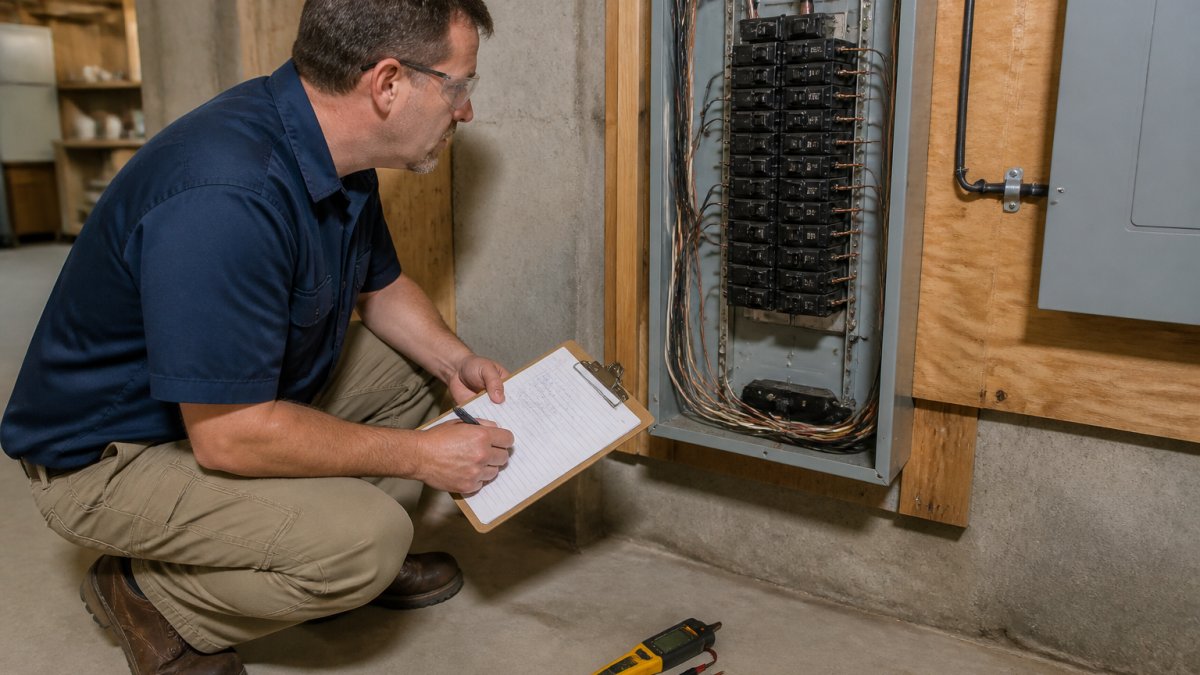
Question 1: Roofing and Flashing
A roof shows a sagging roofline along the ridge. What does this most likely indicate?
A. Normal settling of the roof deck B. A major structural defect in the framing C. Missing flashing at the ridge cap D. Worn shingles near the peak
Correct answer: B. A sagging roofline points to a structural problem, not a surface issue. Missing flashing or worn shingles cause leaks, not sagging. Normal settling does not produce a visible dip along the ridge.
Question 2: Structural Components and Foundation Cracks
A vertical crack runs down a poured concrete foundation wall. Which detail matters most when judging severity?
A. The color of the concrete B. Whether the crack is wider at the top or bottom C. The age of the home D. The direction the wall faces
Correct answer: B. A crack that is wider at one end than the other suggests movement, which is more serious than a uniform hairline crack. Color, home age, and wall orientation do not tell you whether the foundation is actively shifting.
Question 3: Electrical Systems and GFCI Protection
Where is a ground fault circuit interrupter (GFCI) required in a home?
A. Only in bedrooms B. In bathrooms, kitchens, garages, and outdoor outlets C. Only on 240-volt circuits D. On every circuit in the home
Correct answer: B. GFCI protection is required in wet and damp locations, including bathrooms, kitchens, garages, and outdoor outlets. It is not limited to bedrooms or 240-volt circuits, and not every circuit in a home needs one.
Question 4: Heating, Cooling, and HVAC Distribution
A forced-air furnace runs, but some rooms stay cold. What is the most likely cause?
A. The furnace is undersized for the home B. A blocked or leaking duct in the distribution system C. The thermostat is set too low D. The air filter is brand new
Correct answer: B. When the furnace runs but specific rooms stay cold, the distribution system is usually the problem. A blocked or leaking duct sends heated air somewhere other than the room.
Question 5: Plumbing Supply, Drainage, and Water Heaters
Water pools around the base of a water heater. What should an inspector report?
A. Normal condensation, no action needed B. A possible leak from the tank or a fitting that needs repair C. A problem with the home's water pressure D. A blocked floor drain
Correct answer: B. Pooling water at the base of a water heater signals a leak, either from the tank itself or a connection. Condensation is rarely enough to pool. Water pressure and floor drains do not explain water gathering at the heater.
Question 6: Exterior Cladding, Grading, and Drainage
The ground slopes toward the foundation on all sides of a home. Why is this a problem?
A. It improves drainage B. It directs water toward the foundation and can cause moisture damage C. It has no effect on the home D. It only matters in cold climates
Correct answer: B. Soil should slope away from the foundation so water drains away from the home. When the ground slopes toward the house, water pools against the foundation and can lead to moisture damage. This applies in every climate.
Question 7: Insulation, Ventilation, and Interior Systems
An attic has insulation but no ventilation. What is the likely result?
A. Lower energy bills B. Trapped moisture that can damage the roof structure C. Better indoor air quality D. No effect on the home
Correct answer: B. Insulation without ventilation traps moisture in the attic, which can rot roof framing and sheathing over time. It does not lower energy bills or improve air quality. Ventilation and insulation work together.
NHIE Number Questions: Why Size, Spacing, and Clearance Values Decide Answers
A large share of NHIE questions are "number" questions. These ask you to know the size of a material, the spacing between components, or the clearance around an item.
Examples include required spacing for framing members, minimum clearances around electrical panels, and standard pipe sizes.
This is where a lot of older study material falls short. If the numbers in your practice questions are outdated, you will memorize the wrong values and miss easy points on the real exam.
How to Use an NHIE Practice Test Without Wasting Your Study Hours
An NHIE practice test is only useful if you review every answer, right and wrong. Taking test after test without studying your misses wastes the hours you have.
Here is how to get the most from each session:
- Take a full-length practice test under timed conditions
- Score it and mark every question you missed
- Read the rationale for each wrong answer, not just the correct one
- Note which section each miss falls into
- Re-study those sections before your next test
The review step is where learning happens. A missed question tells you exactly which topic to revisit. Skip that step and you will keep missing the same types of questions.
NHIE Practice Questions by Section: Building a Diagnostic Study Plan
A diagnostic study plan starts with one full-length practice exam, then uses your results to decide where to spend your time. Most people study what they already know because it feels comfortable. That is a mistake.
Here is a concrete process you can run this week:
- Take one full-length, timed practice exam cold. No notes, no pauses, no looking anything up. You want an honest baseline.
- Score it by section. Not just an overall percentage, break your results down across all 13 sections so you can see which ones dragged your score down.
- Rank the 13 sections from lowest to highest. Your lowest three sections are where the next two weeks of study go.
- Re-study those sections, then retest only those sections. Repeat until every section is at or above your target.
- Take a second full-length exam and compare the section breakdown to your first attempt. If a section did not move, your study method for that section is not working, change it.
A sample two-week schedule for someone whose weakest sections are electrical, HVAC, and roofing:
- Days 1-2: Electrical systems and GFCI protection, review the concepts, then run 50+ section-specific questions.
- Days 3-4: Heating, cooling, and HVAC distribution, same pattern.
- Days 5-6: Roofing systems and flashing, same pattern.
- Day 7: Retest all three weak sections. Note any question type you still miss.
- Days 8-10: Your next three weakest sections.
- Days 11-12: Mixed review across all 13 sections.
- Day 13: Full-length timed exam.
- Day 14: Review every miss, then rest.
When you review a missed question, do not just read the correct answer. Ask three things: What concept was I supposed to know? Was this a "number" question where I guessed at a value?
Bulletproof Test Prep's AI-powered system does this ranking for you.
Your practice test results are a map. The sections you score lowest on are the sections that will decide whether you pass. Study those first.
Conclusion: Practice Harder Than the Real Exam
The NHIE rewards preparation, not luck. The EBPHI keeps its questions private and rotates new ones in constantly, so your practice material has to be current, cover all 13 sections, and match the exam's format.
That is what Bulletproof Test Prep is built for.
Start your free diagnostic with Bulletproof Test Prep and find out which sections need your attention before test day.
Frequently Asked Questions
Does the NHIE publish its exam questions and answers?
No. The EBPHI does not release its questions or answer keys, and calling them will not get you a copy. What they do publish is the content outline showing the topics and domains their questions and answers are built around. That is why NHIE practice questions have to be written to match the published topics and the exam's specific question-and-answer format, not copied from a leaked bank that does not exist.
How often should NHIE practice questions be updated?
Treat any question bank older than a few years as a starting point, not a study plan. New questions are constantly added to the exam and older ones are retired, so material built from questions written five or ten years ago may cover items you will never see. Bulletproof Test Prep created over 2,500 questions for the NHIE to cover the 13 sections, and the platform is designed so practice content keeps pace with the current exam.
Are older NHIE practice questions still useful?
They can help with broad concepts like how a roofing system sheds water or why a GFCI trips, but do not rely on them for specifics. Number questions, which ask about sizes, spacings, and clearances of materials and components, are the most likely to have changed. Use older material to review fundamentals, then move to current NHIE practice questions by section so you are testing against what the exam actually covers now.
How many questions are on the NHIE test?
The exam is a fixed-length multiple-choice test, and the exact count is published by the EBPHI rather than fixed in prep material. What matters more for your study plan is pacing: you need enough timed, full-length practice runs to finish every question without rushing. Unlimited full-length practice exams let you rehearse that pacing repeatedly instead of guessing at it on test day.