 how-to
How to Identify Dangerous Electrical Wiring Methods
Last Updated: November 5, 2026
Quick Summary
Identifying dangerous electrical wiring means spotting flickering lights, warm outlet covers, repeated breaker trips, and burning smells near switches or panels. Close inspection should also flag legacy methods like knob-and-tube, aluminum branch circuits, cloth-insulated wire, and hidden splices. Rank each finding by urgency, since a scorched outlet is an emergency while a single ungrounded outlet is a to-do item.
- A breaker that trips again and again signals an overloaded or faulty circuit, not normal operation.
- Knob-and-tube conductors are separated by air, have no equipment ground, and cannot be buried under attic insulation.
- Backstabbed outlets loosen with heat cycling, and the resulting arcing builds heat at the device.
- Immediate dangers such as a burning smell, scorched outlet, or visible arcing call for cutting power and calling a licensed electrician now.
- Homeowners can safely check for warm covers and flickering lights, but should never open a panel or probe a wire.
Table of Contents
- Why Dangerous Electrical Wiring Is Easy to Miss
- Signs of Dangerous Electrical Wiring You Can Spot on Inspection
- Old Electrical Wiring Types That Raise Red Flags
- Electrical Hazards Examples: Unsafe Installation Practices and Why They Fail
- How to Prioritize Wiring Hazards by Urgency
- Home Wiring Safety Tips and the Limits of DIY Inspection
- What to Do During an Electrical Emergency
- Build Your Electrical Inspection Skills with Targeted NHIE Practice
- Frequently Asked Questions
Why Dangerous Electrical Wiring Is Easy to Miss
Dangerous electrical wiring hides behind drywall, inside panels, and under insulation. That is exactly what makes it so risky. Identifying dangerous electrical wiring methods is one of the highest-stakes skills on the job. A missed hazard can mean a fire, a shock, or worse.
Most wiring problems do not announce themselves. They smolder quietly for years. Then a small overload tips a marginal connection into a fire.
Here is the core problem: the human eye sees a working light switch and assumes the wiring behind it is fine. It usually is not. Age, sloppy renovations, and amateur repairs leave a trail of hazards that only close inspection reveals.
Below, we break down the warning signs, the old wiring types that raise red flags, and how to rank what you find by urgency.
Signs of Dangerous Electrical Wiring You Can Spot on Inspection
The most common signs of dangerous electrical wiring are flickering lights, warm outlet covers, repeated breaker trips, and a burning smell near switches or panels. Any one of these deserves a closer look. Two or more together point to a real problem.
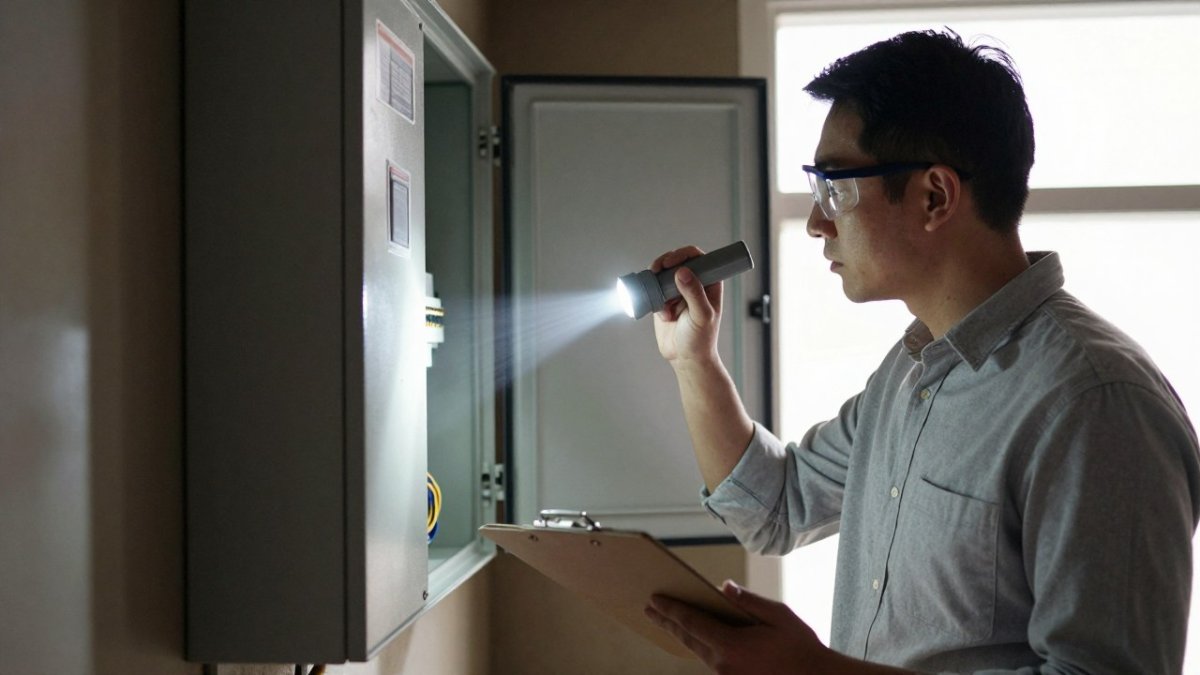
Start with your senses, then work toward the panel.
Flickering Lights, Dimming Lights, and Burning Smells
Flickering or dimming lights often signal a loose connection. When a wire is not tight, current jumps and arcs, and that arcing builds heat. A burning smell near an outlet or switch is a red flag you should never ignore. It can mean insulation is melting or a connection is overheating.
Repeated Breaker Trips and Overloaded Circuits
A breaker that trips once is doing its job. A breaker that trips again and again is telling you the circuit is overloaded or faulty. Overloaded circuits push more current than the wires can safely carry. That heat degrades insulation and raises fire risk. According to the U.S. Fire Administration electrical fire data, electrical failures remain a leading cause of home fires, which is why inspectors treat repeated trips as a serious finding.
Old Electrical Wiring Types That Raise Red Flags
Certain legacy wiring systems are red flags on sight, but the flag is a prompt to investigate, not a verdict.
Knob-and-tube wiring. An early system with individual conductors run through ceramic knobs and through ceramic tubes where they pass through framing.
Cloth-insulated wire. Fabric-wrapped conductors predate modern plastic insulation. The cloth dries out, frays, and exposes bare copper, especially near boxes and where it bends.
Ungrounded two-prong outlets. A receptacle with no ground pin is a visible sign that the circuit may have no equipment ground.
Armored cable and early flexible conduit. Early versions of armored cable, sometimes called BX, used a bonding strip or the armor itself as the ground path.
Old electrical wiring types are not automatically dangerous, but they demand scrutiny. The NFPA electrical safety guidance stresses that aging wiring and improper modifications are common culprits in home electrical fires.
Electrical Hazards Examples: Unsafe Installation Practices and Why They Fail
The clearest electrical hazards examples come from bad installation work, and each one fails for a physical reason, not just a code reason. Use this as a method-by-method checklist: what to look for, and why it fails.
- Backstabbed outlets. Wires pushed into push-in terminals on the back of a receptacle instead of screwed down under the terminal screws. The spring contact is small and loosens with heat cycling and use. A loose contact arcs, and arcing builds heat at the device. Look for no visible wire under the side screws and conductors entering the back holes.
- Overfilled boxes. Too many wires, devices, and connectors crammed into a box with no room for heat to dissipate. Insulation softens, and the risk of a short or a scorched conductor rises. Look for a box that will not accept its cover, or conductors packed tight against the device.
- Wrong-size breakers. A breaker rated higher than the wire can carry, so the wire overheats before the breaker trips. The breaker protects the wire, not the appliance, and an oversized breaker defeats that protection. Look for a large breaker feeding a small branch circuit and compare the breaker rating to the conductor size.
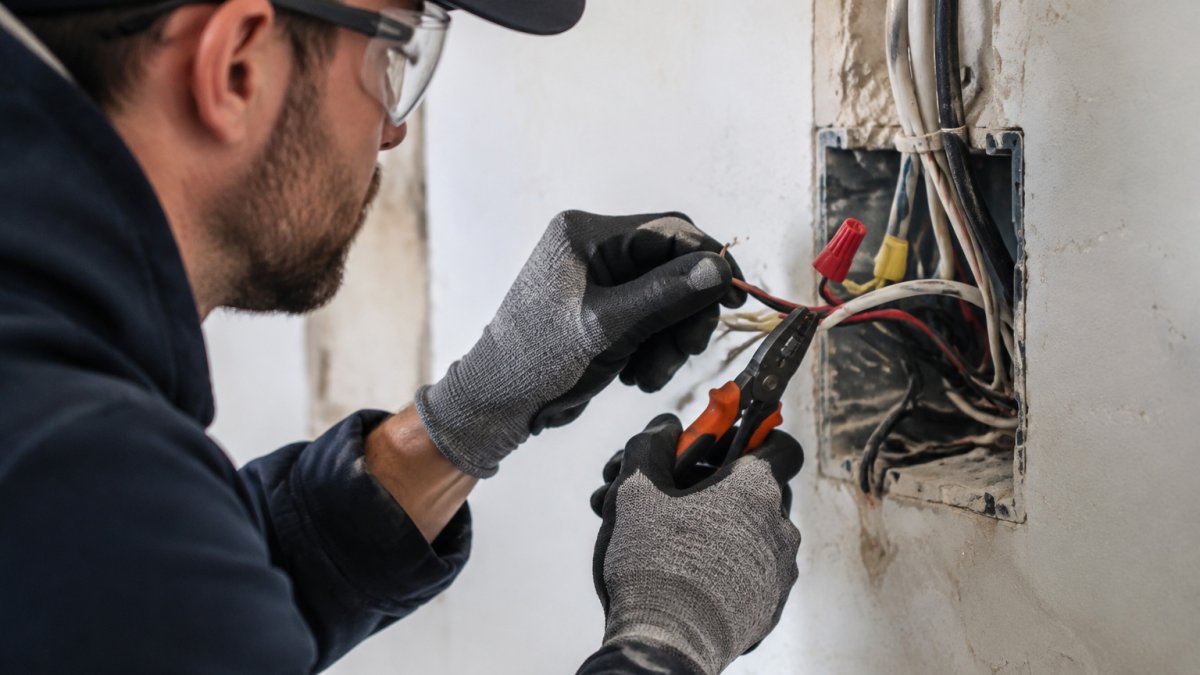
- Missing junction boxes. Splices twisted and taped inside a wall cavity have no enclosure, no strain relief, and no inspection access. The splice can pull apart or overheat unseen. Look for taped bundles behind drywall or in attic spaces with no box.
- Improper splices and connectors. Wire nuts on mismatched conductor sizes, twisted-and-taped joints, or connectors not rated for the wire type. The joint has higher resistance than the conductor, so it heats under load. Look for tape-wrapped joints and connectors that do not match the wire.
- Incorrect wire sizing. A conductor too small for the circuit's load or for the breaker protecting it. The wire runs hot, insulation degrades, and the failure is hidden inside the wall. Look for small-gauge wire on large appliances and compare it to the breaker rating.
- Unsuitable connections. Copper and aluminum joined without a connector rated for the combination, or stranded wire landed under a terminal designed for solid wire. Dissimilar metals corrode, resistance climbs, and the joint heats. Look for bare aluminum against copper and for connectors not marked for the wire type.
- Missing or improper grounding and bonding. A circuit with no equipment ground, or a ground path interrupted at a fitting or box. Fault current has no low-resistance path back to the panel, so a fault can energize metal parts. Look for two-prong receptacles, missing ground screws, and loose bonding at boxes.
- Damaged or missing cable clamps and bushings. Cable entering a box without a clamp or anti-short bushing can chafe the insulation against the metal edge. The conductor eventually contacts the box. Look for cable moving freely in the knockout and for missing bushings.
Exposed Wires, Loose Connections, and Damaged Insulation
Exposed wires and loose connections are the hazards inspectors find most often. Damaged insulation on wire leaves bare copper ready to touch a metal box or a person. Rodents chew insulation. Heat cracks it. Nails and screws nick it during renovations. Any break in that protective layer turns a safe circuit into a shock and fire risk.
Ranking What You Find by Urgency
Once you have identified a method, rank it so the client knows what to fix first. Immediate danger includes a burning smell, a scorched outlet or device, visible arcing, or a shock from a fixture; cut power and call a licensed electrician now. High priority includes exposed conductors, damaged insulation, a wrong-size breaker, and improper splices; repair before occupancy. Moderate priority includes a single ungrounded outlet or an overfilled box with no signs of heat; schedule repair soon. A method-by-method checklist plus a severity rank is what turns a list of hazards into an actionable report.
Watch out: a hazard that looks moderate in the panel can be immediate at the device, so confirm the condition at both ends of the circuit before assigning a tier.
How to Prioritize Wiring Hazards by Urgency
Rank what you find into three tiers so the client knows what to fix first.
| Urgency | Example Hazard | Recommended Action |
|---|---|---|
| Immediate | Burning smell, scorched outlet, arcing | Cut power, call a licensed electrician now |
| High | Exposed wires, damaged insulation, wrong-size breaker | Repair before occupancy |
| Moderate | Ungrounded outlets, overfilled boxes | Schedule repair soon |
Prioritizing by urgency is what separates a useful report from a scary one. A scorched outlet is an emergency. A single ungrounded outlet is a to-do item. Tell the client which is which.
Home Wiring Safety Tips and the Limits of DIY Inspection
Home wiring safety tips start with one rule: look, do not touch. A homeowner can safely check for warm outlet covers, watch for flickering lights, and note breaker trips. That is where safe DIY inspection ends.
The limits matter. Never open a panel, probe a wire, or remove an outlet cover with the power on. Testing requires a multimeter and training. Wire stripping, crimping, and twisting are licensed trade work. The OSHA electrical safety standards treat energized work as a serious hazard for good reason.
What to Do During an Electrical Emergency
If you smell burning, see sparks, or hear arcing, act fast. Cut power at the breaker if it is safe to reach. Get everyone out and call 911 if there is fire or smoke. Never throw water on an electrical fire. For a shock victim, do not touch them until the power is off.
Then document everything for the report and recommend a licensed electrician. Knowing the emergency steps is a skill worth drilling before exam day.
Build Your Electrical Inspection Skills with Targeted NHIE Practice
Electrical questions trip up plenty of candidates, especially those without a technical background. Our NHIE electrical section study guide breaks the section into clear domains and procedures. If you want to widen your base, see our roundup of the best resources for learning residential electrical systems.
Ready to test yourself? Take our free diagnostic and see where you stand. For current prices and access options, visit our pricing page.
Frequently Asked Questions
How do I know if my wiring is safe?
Start with the visible signs: no burning smell, no scorch marks at outlets, no flickering lights when appliances cycle on, and breakers that trip only rarely. Open the panel and look for rust, double-tapped breakers, or mismatched wire sizes. If the home has knob-and-tube or aluminum branch wiring, treat it as unsafe until a licensed electrician confirms otherwise. A multimeter reading at outlets can confirm grounding, but it will not reveal hidden insulation damage inside walls.
Is 1950s wiring safe?
Not automatically. Homes built in the 1950s often used two-prong ungrounded circuits, and some used early aluminum branch wiring. Both create shock and fire risk by modern standards. Working lights and outlets do not prove safety, because insulation degrades inside walls where you cannot see it. An electrician should evaluate any 1950s-era panel and confirm whether grounding and proper circuit protection have been added.
What should a home inspector do after finding a possible wiring hazard?
Document the finding with photos and a clear description, note the location and the specific defect, and recommend evaluation by a licensed electrician in the report. Do not open walls, remove cover plates beyond the panel, or attempt repairs. Classify the hazard by urgency so the client knows whether it needs same-day attention or a routine follow-up, and record the exact wiring method observed so the electrician has a starting point.
When should an electrician evaluate suspected unsafe wiring?
Call an electrician immediately for a burning smell, visible sparks, scorch marks, or a breaker that will not reset. Schedule an evaluation within days for repeated breaker trips, warm outlet covers, or buzzing at switches. For older wiring types like knob-and-tube or aluminum branch circuits, book an evaluation before any renovation or added load. Any hazard involving exposed wires or water intrusion near the panel warrants same-day attention.
The gap between a passing score and a retake usually comes down to the electrical and HVAC sections. Bulletproof Test Prep pinpoints those weak spots with an AI study system, 3,500+ practice questions, and unlimited full-length exams that simulate real test conditions. Get started with Bulletproof Test Prep and walk into the NHIE ready to pass.