
 ultimate-guide
NHIE Electrical Section Study Guide: Pass With Confidence
Table of Contents
- NHIE Electrical Section Overview and Exam Purpose
- Electrical Systems and Components You Must Know
- Common Electrical Defects and Safety Hazards
- Step-by-Step Electrical Inspection Workflow
- NHIE Electrical Practice Questions and Answer Explanations
- NHIE Electrical Exam Topics and Knowledge Assessment
- How to Pass the NHIE: Proven Study and Test-Taking Strategies
- Accelerate Your Preparation With Focused Study Tools
- Frequently Asked Questions
Last Updated: October 5, 2026
NHIE Electrical Section Overview and Exam Purpose
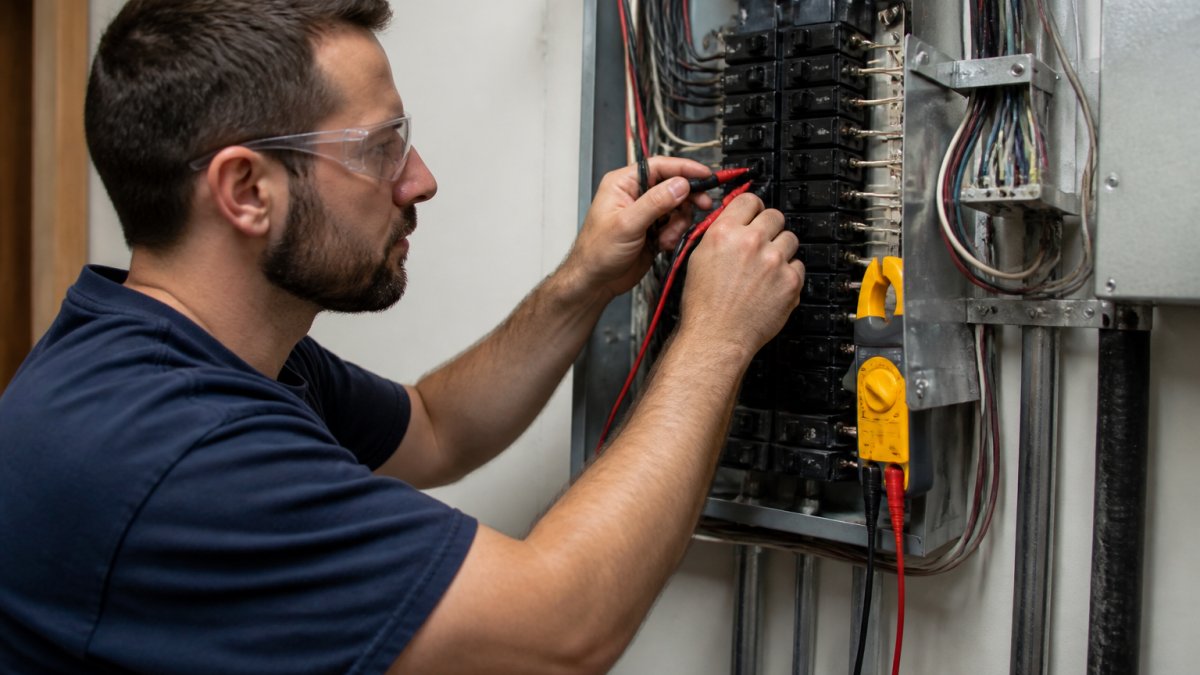
The NHIE electrical section tests your ability to identify electrical systems, components, and defects during a residential inspection.
Many candidates assume this section requires advanced electrical knowledge. It doesn't. It requires systematic understanding of how residential electrical systems work, what common defects look like, and how to document findings professionally.
The electrical section accounts for roughly one-third of the NHIE exam.
What the Electrical Section Tests
You'll encounter questions about service entrances, panels, circuit breakers, wiring types, grounding and bonding, overcurrent protection, receptacles, switches, lighting fixtures, and GFCI/AFCI devices.
Safety hazards form a major portion. Reversed polarity, improper grounding, missing bonding, overcrowded panels, outdated wiring, and inadequate overcurrent protection all appear regularly.
The third dimension tests professional boundaries. Inspectors are not electricians.
Blueprint and Topic Weighting
Service entrance and panel inspection represents a significant chunk of exam content, expect multiple questions.
Receptacles and switches form a moderate weight. GFCI and AFCI devices are tested regularly because they're critical safety features.
Understanding this weighting helps you allocate study time. Spend more time on service entrance systems, panel configuration, and circuit protection.
Electrical Systems and Components You Must Know
Residential electrical systems follow predictable architecture. Current enters at the service entrance, flows through the main panel where it's distributed into branch circuits, and reaches individual outlets, switches, and fixtures. Understanding this flow, and recognizing when something interrupts it unsafely, is the foundation of the electrical section.
Service Entrance and Electrical Panel
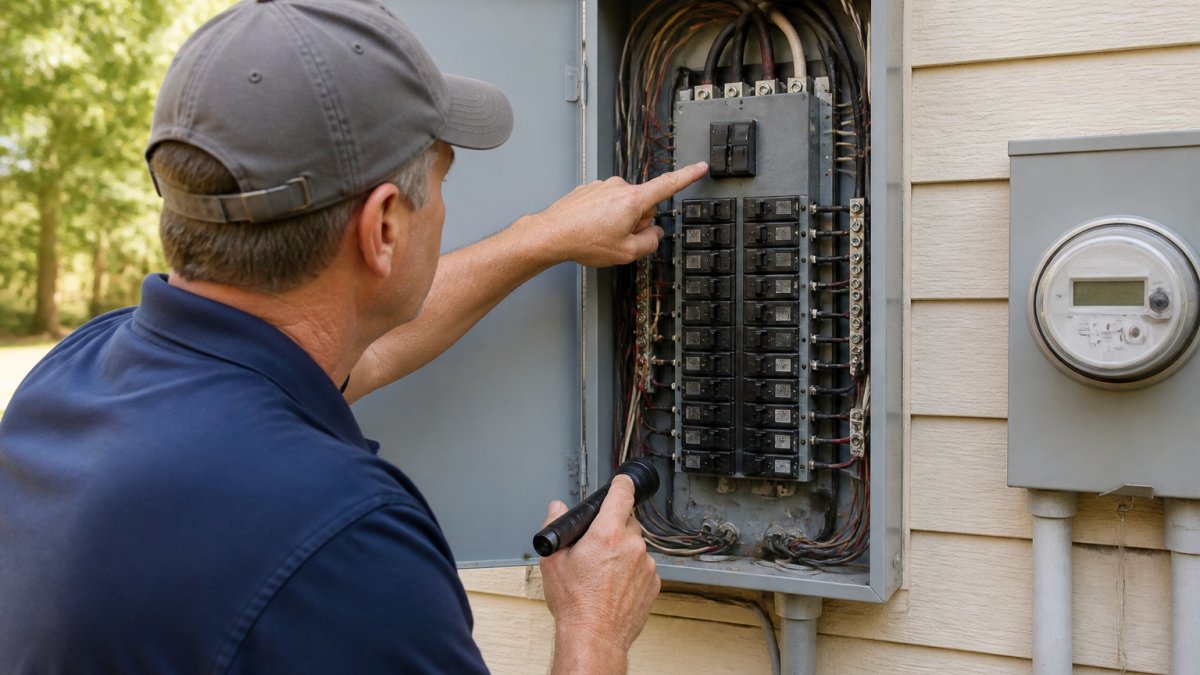
The service entrance is where utility power enters the home: the meter, service lines, and main disconnect.
Inspectors need to recognize proper installation: correct size for the home's demand, proper grounding connections, secure conduit, and accessible disconnect.
Panel inspection focuses on visible conditions.
Many candidates miss panel defects because they focus only on breaker labels instead of physical condition.
Circuit Breakers, Wiring, and Branch Circuits
Circuit breakers protect wiring and devices from overcurrent.
Breakers are rated in amperes: 15, 20, 30, 40, 50 amp and higher.
Branch circuits distribute power from the panel to outlets and fixtures. Most residential circuits are 15 or 20 amp.
Wiring types vary by location and era.
Grounding, Bonding, and Overcurrent Protection
Grounding provides a safe path for electricity to return to earth if something goes wrong. Every electrical system must be grounded at the service entrance.
Bonding connects metal parts together to ensure they're at the same electrical potential.
Overcurrent protection means breakers and fuses.
Receptacles, Switches, Lighting, and GFCI/AFCI Protection
Receptacles (outlets) are where devices plug in.
Switches control lighting and devices. Standard toggle switches are straightforward.
Lighting includes ceiling fixtures, wall sconces, and recessed fixtures.
GFCI protection prevents electrocution in wet locations.
AFCI protection prevents arc faults (dangerous electrical arcs that can cause fire).
Common Electrical Defects and Safety Hazards
Knowing components is necessary but not sufficient. You must recognize defects and understand their safety implications.
Identifying Unsafe Conditions During Visual Inspection
Reversed polarity occurs when hot and neutral wires are swapped at a receptacle.
Improper grounding means the grounding conductor is missing, damaged, or not properly connected.
Missing or improper bonding at water meters, gas lines, or in pools creates shock hazard.
Double-tapped breakers (two wires connected to a single-pole breaker designed for one wire) represent improper installation.
Reporting Findings and Inspector Scope Boundaries
As an inspector, you report what you observe. You do not diagnose the root cause unless it's obvious from visual evidence.
Common mistakes include recommending that a panel be "upgraded" (beyond scope), diagnosing a breaker as "bad" without testing, or suggesting specific repair methods.
Understanding these boundaries is tested explicitly on the NHIE electrical section.
Step-by-Step Electrical Inspection Workflow
Systematic inspection prevents missed defects and ensures consistent, professional documentation.
Visual Assessment Procedures and Note-Taking
Begin at the service entrance.
Move to the electrical panel.
Inspect receptacles throughout the home, particularly in kitchens, bathrooms, and outdoor locations.
Inspect switches and lighting fixtures. Verify they're properly installed and functional.
Observe visible wiring. Identify wiring types in attics, basements, and crawlspaces.
Analysis of Findings and Documentation
After visual assessment, analyze what you've observed. Distinguish between minor cosmetic issues and genuine safety hazards.
Document findings clearly and specifically. Vague language like "electrical problems" is unprofessional.
Organize findings by location and severity so the homeowner or electrician can address them systematically.
Explain findings in terms the homeowner understands.
NHIE Electrical Practice Questions and Answer Explanations
The best way to prepare is through practice questions that mirror exam format and difficulty.
Sample Questions with Detailed Explanations
Question 1: A home inspector observes a main electrical panel with a 200-amp main breaker.
Correct Answer: B
Explanation: Double-tapped breakers are improper unless the specific breaker is designed to accept two wires.
Question 2: Which of the following is the PRIMARY purpose of grounding in a residential electrical system?
Correct Answer: B
Correct Answer: C
Explanation: Code requires GFCI protection on kitchen countertop outlets.
Common Mistakes Candidates Make
The most common mistake is confusing GFCI and AFCI. GFCI protects against ground faults; AFCI protects against arc faults.
Another frequent error is overstating the inspector's scope.
Many candidates miss grounding and bonding questions because they treat these as abstract concepts rather than concrete safety features.
NHIE Electrical Exam Topics and Knowledge Assessment
The NHIE electrical section tests specific knowledge areas aligned with residential inspection practice.
| Knowledge Area | Key Concepts | Exam Weight |
|---|---|---|
| Service Entrance & Panel | Main disconnect, breaker ratings, panel condition, overcrowding | High |
| Circuit Protection | Breakers, fuses, overcurrent devices, amperage ratings | High |
| Wiring Methods | Romex, conduit, knob-and-tube, wire gauges, insulation types | Moderate |
| Grounding & Bonding | Service grounding, bonding jumpers, grounding electrodes, metal connections | Moderate |
| Receptacles & Switches | Outlet types, three-way switches, proper installation, grounding | Moderate |
| GFCI/AFCI Protection | Location requirements, function, installation methods, testing | Moderate |
| Hazards & Defects | Reversed polarity, improper installation, outdated methods, safety concerns | High |
| Inspector Scope | What you can and cannot do, testing limitations, professional boundaries | High |
Content Areas and Inspection Principles
The electrical section applies consistent inspection principles across all topics. Systematic observation comes first, you look for visual evidence of problems.
Safety reasoning underlies every question. Why is a defect a problem? Because it creates shock hazard, fire hazard, or failure risk.
Code compliance appears throughout.
Professional Responsibilities and Ethical Standards
As a home inspector, you have professional responsibilities to the homeowner, the real estate transaction, and the profession.
The exam tests whether you understand these boundaries. You cannot perform electrical testing with specialized equipment.
Ethical standards require clear, honest communication. You explain findings so the homeowner understands what you found and why it matters.
How to Pass the NHIE: Proven Study and Test-Taking Strategies
Passing the NHIE electrical section requires focused preparation, strategic practice, and disciplined test-day execution.
Creating Your Study Plan
Start by assessing your baseline knowledge. Take a diagnostic practice exam covering all electrical topics.
Allocate study time proportionally. Spend more time on high-weight topics (service entrance, panel inspection, circuit protection, hazards) and moderate time on moderate-weight topics.
Create a study schedule that works with your life.
Study in phases. Phase one: learn the concepts and components.
Using NHIE Practice Exams Effectively
Practice exams are your most valuable study tool.
Instead, use practice exams strategically. Take your first early to establish baseline performance.
Take practice exams regularly, weekly if possible. Track performance by topic.
Review questions you answered correctly too.
Time yourself during practice exams. The real NHIE has time constraints.
Test-Day Preparation and Time Management
The week before the exam, reduce study intensity. You've done the preparation.
Get adequate sleep the night before.
On test day, arrive early.
Manage your time during the exam. Divide your time roughly equally across questions.
Answer questions strategically.
Don't second-guess yourself excessively. Your first instinct is usually correct.
Accelerate Your Preparation With Focused Study Tools
Comprehensive study requires more than reading about electrical systems.
Bulletproof Test Prep provides an AI-driven platform designed specifically for NHIE preparation.
Our unlimited full-length practice exams let you simulate real test conditions repeatedly.
The AI-powered system analyzes your learning patterns across all questions you attempt.
With a money-back guarantee, you have time to prepare thoroughly without pressure. Start with our free diagnostic to see how you'd perform on the real exam right now.
Frequently Asked Questions
What electrical topics are covered on the NHIE exam?
The NHIE electrical section covers service entrance, electrical panels, circuit breakers, branch circuits, wiring methods, grounding and bonding, overcurrent protection, receptacles, switches, lighting fixtures, GFCI and AFCI protection, and common electrical defects. The exam tests your ability to identify components during visual inspection, understand how electrical systems work, recognize safety hazards, and know the boundaries of inspector scope. Study guides focus on these domains because they directly reflect what you'll encounter during property inspections.
How should I study the electrical section of the NHIE?
Start by mastering the blueprint topics in order of weight: service entrance and panels receive significant coverage, followed by protection devices and wiring. Use practice questions to test your understanding of each component, then review explanations for incorrect answers. Study in focused 45-60 minute sessions rather than marathon cramming. Create visual flashcards of components and defects, and take notes on why certain conditions are unsafe. Most candidates benefit from combining study materials with unlimited practice exams to simulate real test conditions and track progress.
Are there practice questions for the NHIE electrical section?
Yes. Comprehensive NHIE prep platforms offer hundreds of electrical-specific practice questions with detailed answer explanations. These questions mirror real exam format and difficulty, covering service entrance identification, circuit breaker operation, grounding principles, GFCI/AFCI protection, and defect recognition. Practice questions help you identify knowledge gaps in specific areas like bonding or overcurrent protection. Full-length practice exams let you experience the complete electrical section under timed conditions, which is critical for building test confidence and managing time on exam day.
How difficult is the electrical section of the NHIE?
The electrical section ranks among the more challenging domains for many candidates, particularly those without technical backgrounds. The difficulty stems from unfamiliar terminology, abstract concepts like grounding and bonding, and the need to recognize defects during visual inspection scenarios. However, difficulty is manageable with structured study. Most candidates who struggle initially improve significantly after focused practice with explained answers. The key is understanding not just what components do, but why they matter for safety and how inspectors identify problems in the field.
How many questions on the NHIE cover electrical topics?
The NHIE exam contains approximately 200 total questions across three domains. The electrical section represents roughly 25-30% of the exam, meaning approximately 50-60 questions will test electrical knowledge. This weighting reflects the importance of electrical safety in home inspection. Because electrical questions carry significant weight, strong preparation in this domain directly improves your overall exam score. Candidates who master electrical content often see substantial gains in their final exam performance.
What should I review the day before the NHIE?
The day before your exam, focus on light review rather than new material. Review your personal list of weak topics, but spend no more than 1-2 hours total. For the electrical section, scan flashcards of components and common defects, and skim explanations of questions you've missed multiple times. Avoid cramming new concepts. Instead, prepare your exam materials, plan your route to the testing center, and get adequate sleep. A well-rested mind performs better on test day than additional last-minute studying. Trust your preparation and use the final day to build confidence.
Is the NHIE exam difficult for candidates without technical backgrounds?
The NHIE is challenging for candidates without technical experience, especially in the electrical and HVAC sections. However, lack of technical background is not a barrier to passing. The exam tests inspection knowledge and safety awareness, not advanced electrical engineering. Candidates without technical experience often succeed by investing extra study time in electrical fundamentals, using visual learning tools, and completing more practice questions. Many home inspection training programs and study platforms provide foundational explanations designed specifically for non-technical learners, making the material accessible.
Passing the NHIE electrical section is achievable with systematic preparation and the right study resources. The electrical systems and components are learnable. The defects and hazards follow logical patterns. The inspection principles are consistent. Focus your study on high-weight topics, practice with realistic questions, and track your progress. Start free with Bulletproof Test Prep's diagnostic assessment and discover your specific preparation needs.